
Field Notes:
EPISODE 01
LTL Pricing Explained With Curtis Garrett
TLDR
In this episode of Field Notes, Curtis Garrett breaks down how LTL freight pricing actually works, why rates are often hard to understand, and what shippers can do to improve cost, service, and carrier relationships.
Date
Type
Interview
Guest
Curtis Garrett
What Distributors Need to Know About Freight Costs, Carrier Leverage, and the Future of Rating
Featuring Curtis Garrett, co-founder and CEO of Lateral, founder of uLTL, and one of the most trusted voices in LTL freight pricing.
LTL freight is one of the most important (and often least understood) parts of a distributor’s business.
In this episode of Field Notes, Curtis Garrett breaks down how LTL freight pricing actually works, why rates are often hard to understand, and what shippers can do to improve cost, service, and carrier relationships.
Rather than only chasing the lowest rate, Curtis explains why distributors need to understand the inputs behind LTL pricing: space, time, risk, freight profile, data quality, accessorials, and how carriers evaluate shippers.
How LTL Pricing Actually Works Today
Most shippers look at the final LTL rate, but that number is built from many different inputs: rate base, fuel, discounts, minimums, accessorials, weight, dimensions, freight class, and service requirements.
Curtis explains why understanding the pricing structure matters if distributors want to make better freight decisions.
The 3 Things That Actually Drive LTL Cost

According to Curtis, most LTL carrier costs come down to three things: space, time, and risk.
If shippers can reduce the space their freight occupies, the time it takes carriers to service them, and the risk their freight creates, they are in a better position to earn stronger pricing and service outcomes.
What Shippers With Leverage Are Doing Differently
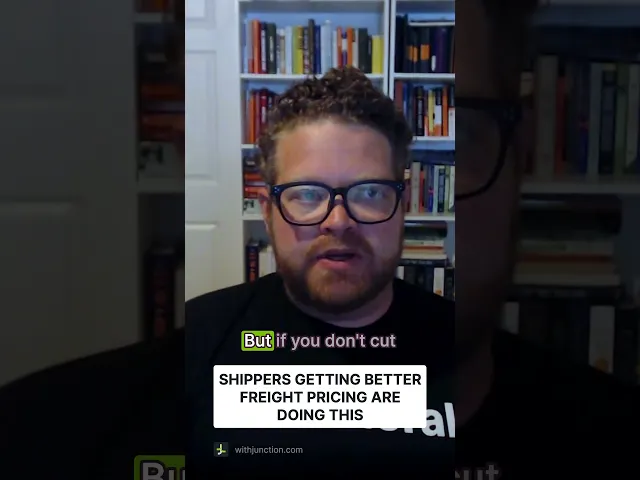
The best shippers are not just chasing cheap freight.
They understand the total cost of service, including damage, missed pickups, invoice issues, delivery failures, customer experience, and how easy or difficult it is to resolve problems with a carrier.
Why LTL Rating Is a Black Box

LTL rating is still difficult because so many factors affect the final price.
Freight class, dimensions, cube rules, minimum charges, accessorials, tariffs, fuel schedules, and carrier-specific logic can all change the rate. Even software can get it wrong when the inputs are wrong.
Watch the Full Episode

In the full conversation, we cover:
How LTL pricing works today
Why many distributors misunderstand freight rates
What actually drives carrier cost
How shippers can become more attractive to carriers
Why the lowest rate is not always the lowest cost
How freight classification and cube-based pricing may change LTL
Why better data and better technology are needed in freight
Stay Connected
Find us @withJunction on YouTube and LinkedIn for more Field Notes episodes, clips, and conversations on distribution, freight, and operations.
Want to be a guest or suggest a topic? Email us at info@withjunction.com.



Getting Started